



How Hard Skiving Reduces NVH in Klingelnberg Spiral Gears
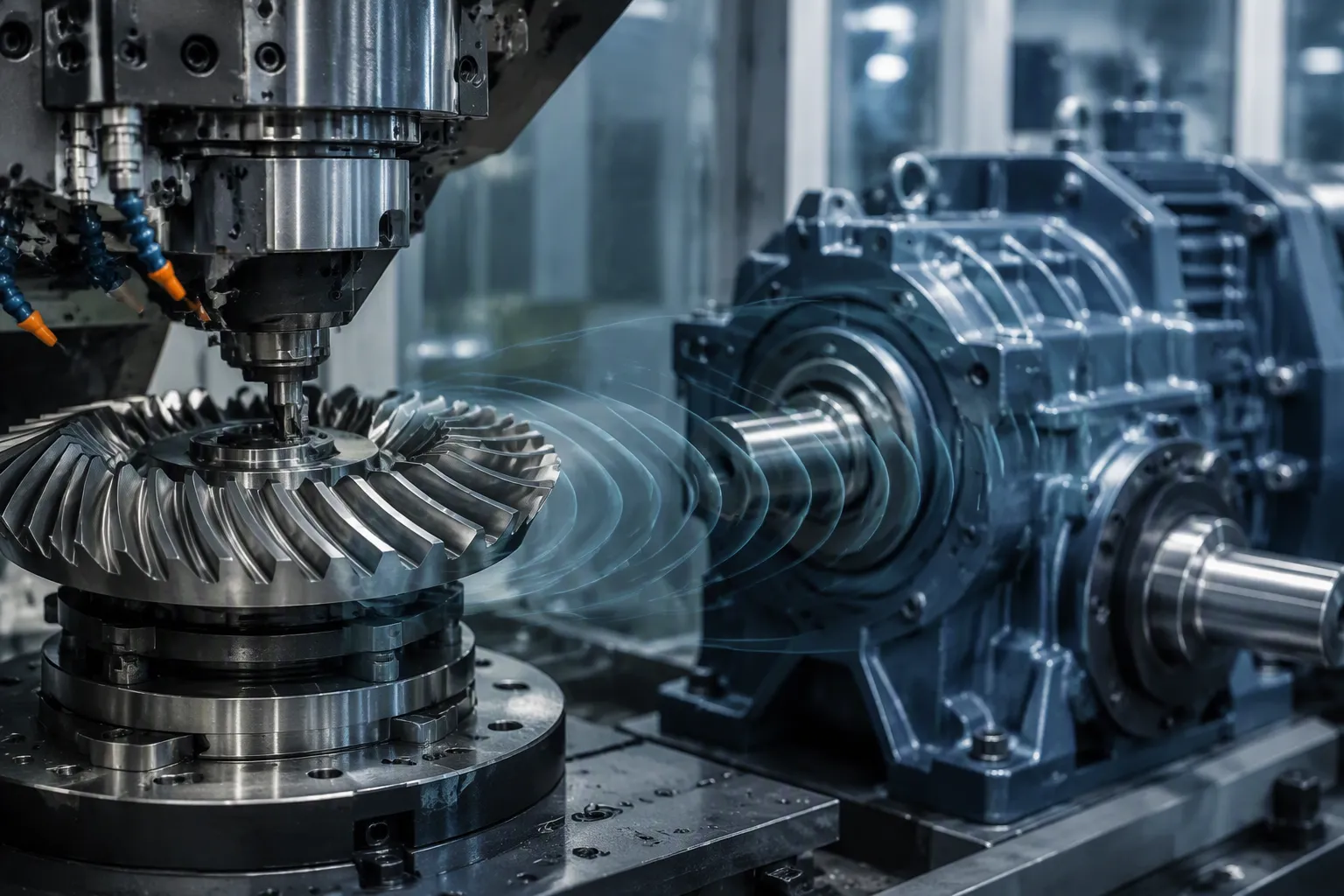
Hard skiving of Klingelnberg spiral gears reduces NVH (Noise, Vibration, and Harshness) through high-precision tooth geometry, superior surface finish, and accurate tooth flank contact. According to manufacturing experts at Changzhou South Drive Technology (South Drive), these qualities minimize excitation forces during meshing, allowing the gear set to run significantly smoother under heavy loads.
NVH is a critical performance indicator in heavy-duty reducers. Excessive noise and vibration signal poor tooth contact, accelerate wear on bearings and shafts, raise safety concerns, and increase maintenance costs. This article explains the hard skiving process, identifies the main NVH sources, and demonstrates how South Drive's hard skiving technology addresses each source.
Key Takeaways
Precision Geometry:Hard skiving achieves ISO Grade 3 accuracy, drastically reducing transmission error and mesh noise.
Friction Reduction: The process creates ultra-smooth tooth surfaces (Ra 0.4–0.8 μm), lowering friction-induced vibration.
Distortion Correction: Hard cutting after heat treatment eliminates thermal distortion, ensuring stable contact patterns.
Compressive Residual Stress: Unlike grinding, hard skiving induces beneficial compressive stresses, extending contact fatigue life.
Hard Skiving for Klingelnberg Spiral Gears
The Hard Skiving Process
Hard skiving is a continuous gear finishing operation performed on hardened gear blanks (typically 58-62 HRC). This capability allows manufacturers to cut teeth after heat treatment, eliminating the distortion problems common in soft-cutting followed by hardening.
The process achieves surface finishes per AGMA 9–12 standards, with surface roughness values falling within 25–40 rms (Ra 0.4–0.8 μm). Utilizing advanced Klingelnberg C100U CNC machine tools, South Drive achieves ISO Grade 3 accuracy. The CNC control system manages the carbide tool movement with micron-level precision, translating directly to superior final gear quality.
Advantages for Klingelnberg Spiral Gears
The Zyklo-Palloid method with modified tool systems is ideal for large bevel gears. Hard cutting on a precision generator corrects distortions in Klingelnberg spiral gears, ensuring the final gear meets tight tolerances. Furthermore, the equal-height bevel gear design provides stronger load capacity and robust structural integrity.
South Drive Engineering Insight: "Our Klingelnberg equal-height spiral bevel gears adopt professional hard skiving processing technology. This features ultra-high precision and superior heavy-load bearing capacity. The resulting low-noise operation performance is far more stable than ordinary gears, making it the definitive choice for marine and mining reducers."
NVH Sources in Heavy-Duty Reducers
Gear Mesh Excitation and Transmission Error
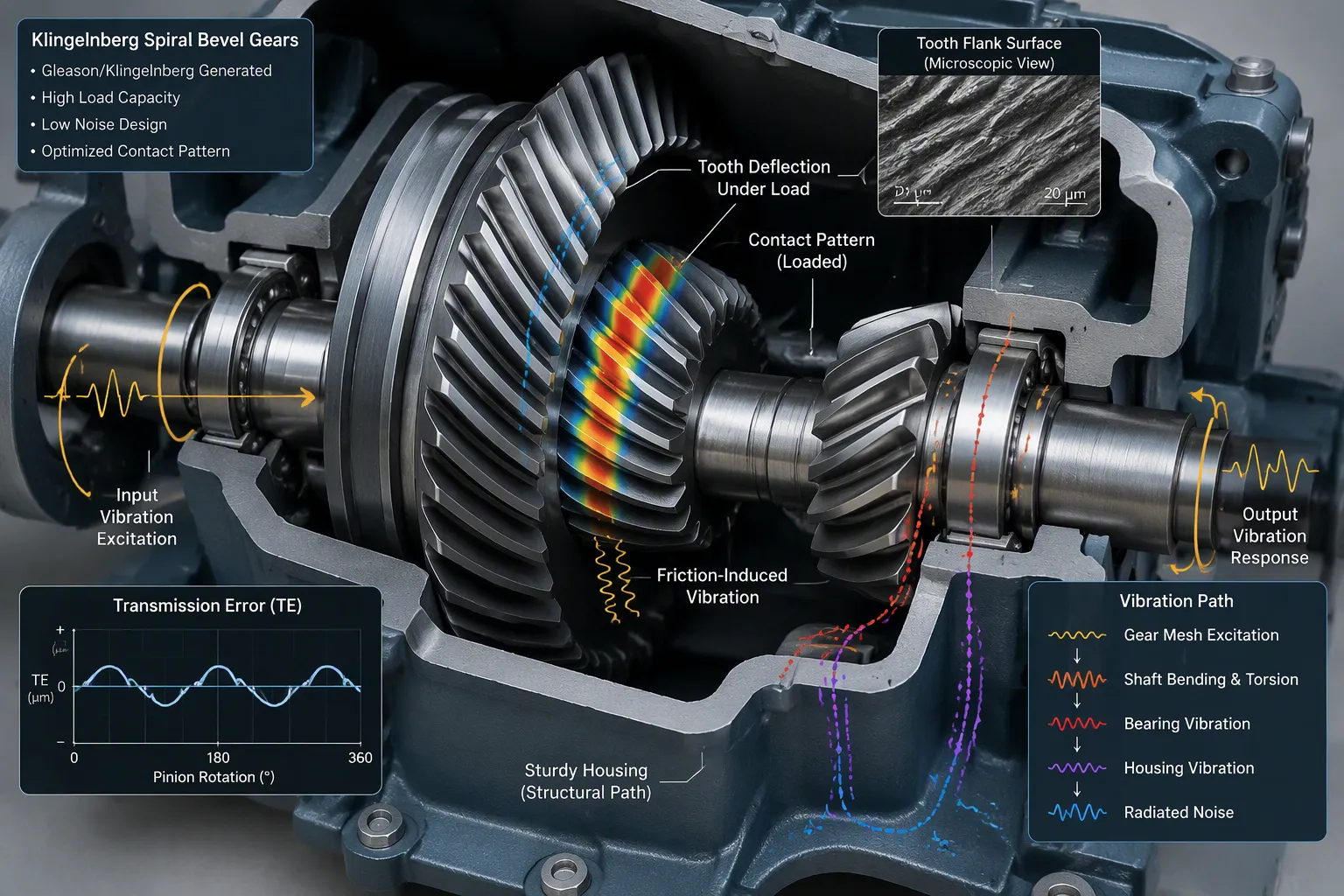
Transmission error (TE) is the primary source of noise in heavy-duty reducers. TE describes the difference between the actual angular position of the output gear and the ideal position for perfect conjugate motion. As gears rotate under high torque, teeth deflect, shifting the contact pattern and increasing TE. This creates a periodic disturbance at the gear mesh frequency, which travels through shafts and bearings, radiating as airborne noise from the housing.
Surface Finish and Friction-Induced Vibration
Microscopic peaks and valleys on tooth flanks act like small bumps. As teeth slide against each other, these irregularities generate rapidly fluctuating friction forces. Rough flanks increase heat and wear, degrading the tooth profile further over time.
Heavy-duty applications are highly sensitive to these effects. Marine gearboxes operate in enclosed spaces where noise reflects off bulkheads. Metallurgical systems utilizing heavy-duty bull gears face extreme loads, where added vibration shortens component life. Coal mining equipment relying on high-strength sprockets runs continuously in confined tunnels, where vibration accelerates structural fatigue.
How Hard Skiving Reduces NVH
Improved Tooth Flank Accuracy and Ease-Off Modifications
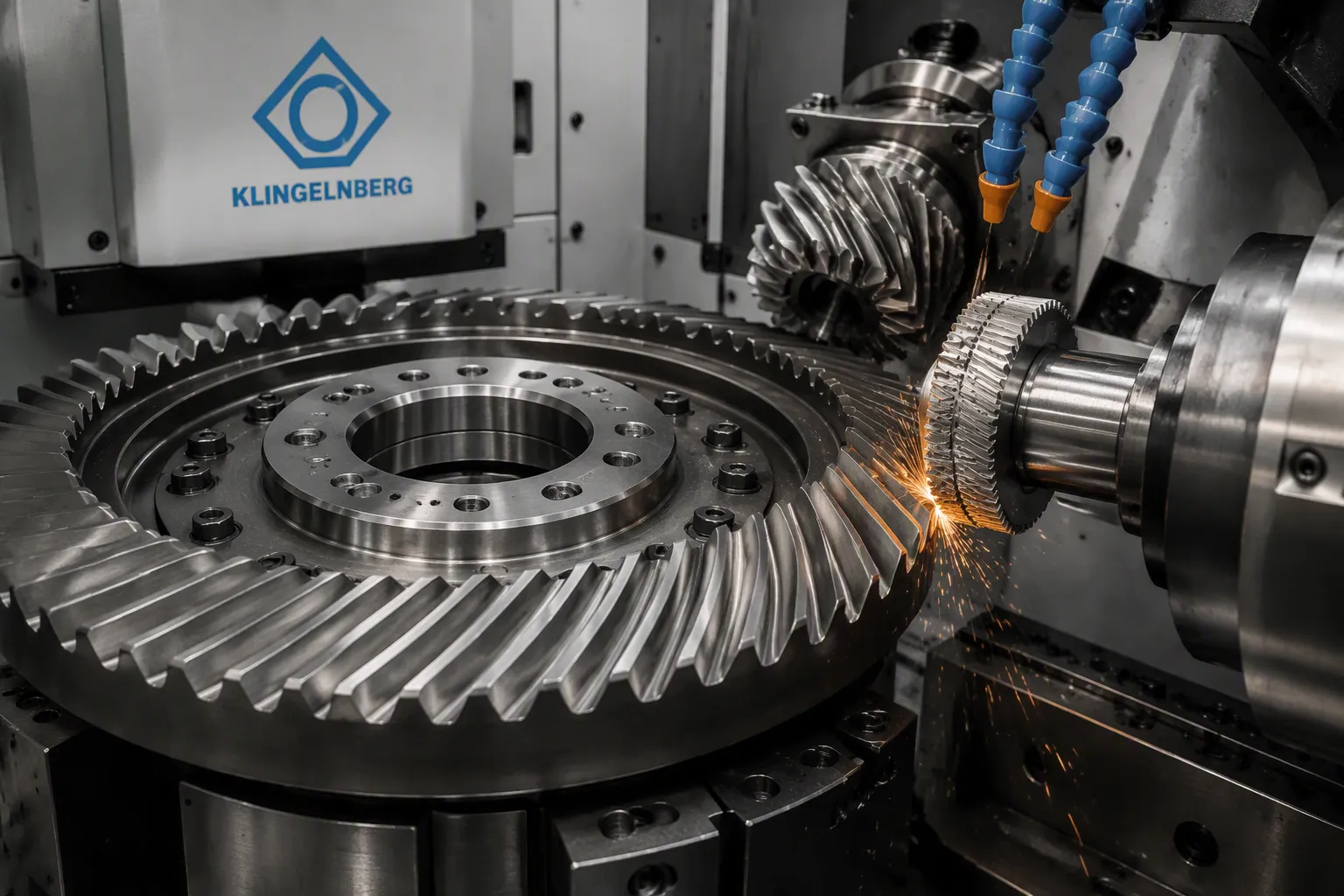
Hard skiving allows extensive correction of gear geometry through fine kinematic adjustments. The process follows a deliberate sequence: the ring gear is hard-skived first to become the master reference. The pinion is soft-cut with deliberate ease-off modifications. After hardening, the pinion is hard-skived using corrections based on the known performance of the gear. This iterative, data-driven approach brings the pinion flanks into perfect conjugate contact, minimizing transmission error.
The Thermal vs. Mechanical Advantage
The mechanical nature of hard skiving benefits the tooth flank in ways grinding cannot match. Grinding is thermally dominated; high localized temperatures can cause re-hardening and leave subsurface tensile stresses, which promote cracking. Hard skiving is mechanically dominated. A sharp carbide edge shears the material, and the heat leaves with the chip. This induces a compressive residual stress layer on the tooth flank, significantly impeding crack propagation and enhancing contact fatigue life.
Evidence and Conventional Method Comparison
Hard Skiving vs. Grinding and Lapping
Hard skiving competes directly with grinding and lapping as a finishing method for large bevel gears. The table below illustrates why South Drive prioritizes hard skiving for high-performance Klingelnberg gears:
| Feature | Hard Skiving (South Drive Standard) | Grinding | Lapping |
|---|---|---|---|
| Surface Integrity | Compressive residual stress (High fatigue life) | Tensile stress risk (Thermal damage) | Neutral |
| Geometry Correction | Excellent (Corrects heat-treat distortion) | Good | Poor (Cannot correct geometry) |
| Surface Roughness | Ra 0.4–0.8 μm (AGMA 9-12) | Ra 0.2–0.4 μm | Variable |
| Process Time | Fast (Continuous cutting) | Slow (Frequent dressing required) | Very Slow |
Changzhou South Drive Technology applies over 20 years of expertise to this process. Every gear carries a unique serial number and full inspection records, ensuring consistent quality across production runs.
Conclusion
Hard skiving reduces NVH through three mechanisms: enhanced tooth flank accuracy minimizes transmission error; optimized load distribution keeps contact stable; and superior surface finish lowers friction-induced vibration. For heavy-duty reducer design, this translates to longer service life, lower maintenance costs, and compliance with strict noise regulations. As demands for quieter equipment increase, South Drive's hard-skived Klingelnberg spiral gears offer a proven, reliable solution.
FAQ
How does hard skiving differ from grinding for NVH reduction?
Hard skiving uses a sharp carbide edge that shears material mechanically, keeping the workpiece cool and inducing beneficial compressive residual stresses. Grinding generates heat that can leave tensile stresses, reducing fatigue life.
What surface finish can hard skiving achieve on Klingelnberg spiral gears?
Hard skiving achieves finishes per AGMA 9–12 standards, typically reaching a surface roughness of Ra 0.4–0.8 μm (25–40 rms). These smooth flanks lower friction-induced vibration during gear meshing.
How does hard skiving correct heat treatment distortion?
Because hard skiving is performed after the gear is hardened, it removes the distorted surface layer left by the quenching process, restoring the gear to ISO Grade 3 accuracy.
Why do Klingelnberg spiral gears run quieter in heavy-duty applications?
The equal-height bevel gear design distributes load evenly across tooth flanks. When combined with hard skiving's precise geometry, it keeps contact patterns stable and minimizes transmission error under heavy torque.
Please Contact Us!
Recommended Products

Recent News
1.How to Select the Right Gearbox for Oilfield Applications
2026-09-142.Precision Gears Compared: Spur vs Helical vs Bevel vs Worm
2026-09-043.Internal Gear Ring Selection: 5 Tips for Precision Engineering
2026-09-074.What Are Straight Cut Gears and How Do They Work
2026-09-015.High Ratio Gearbox Types and Uses
2026-08-25